About
Sean Kuhn: Reporter and Photojournalist
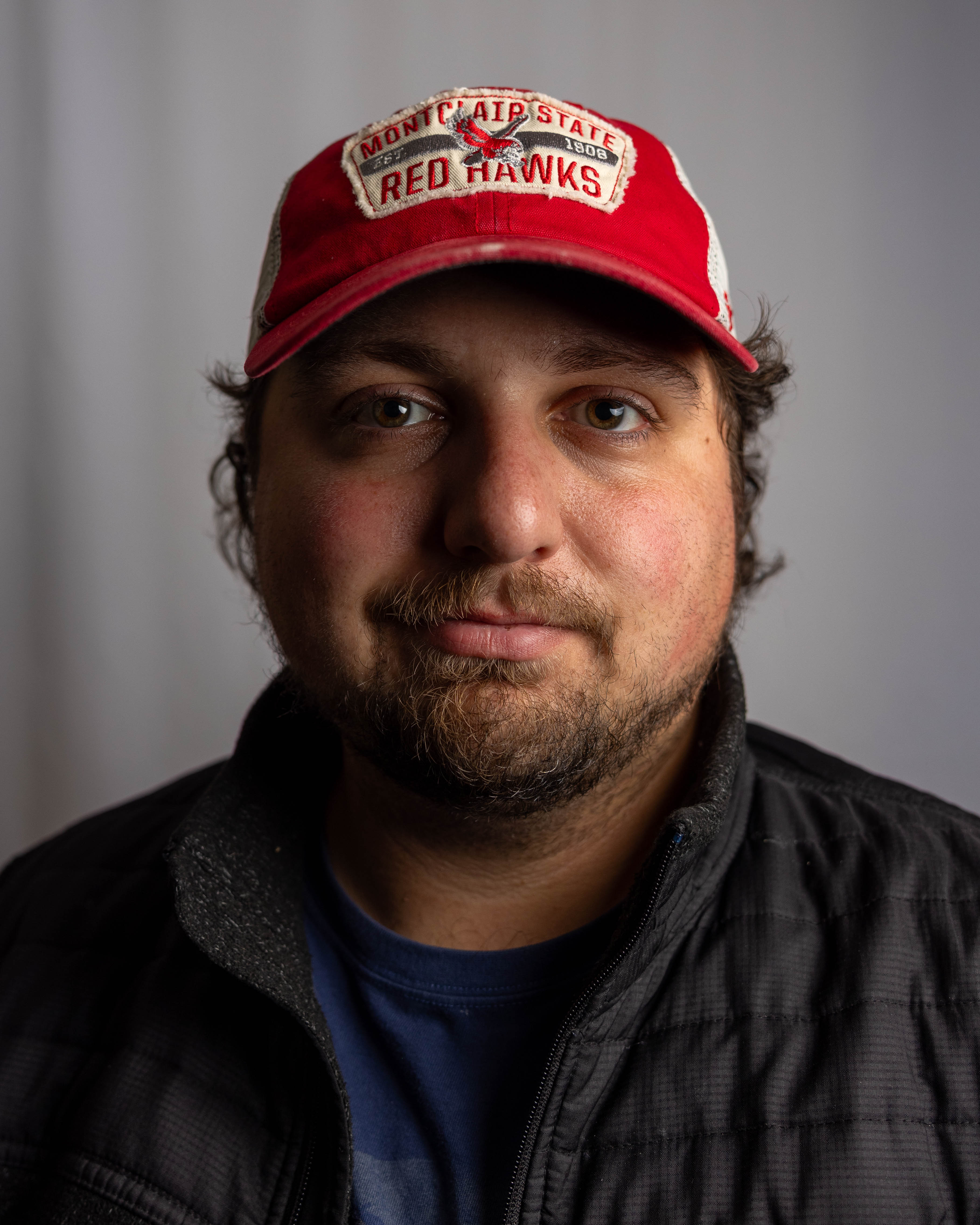
Sean Kuhn is a general assignment reporter and photographer for the Sullivan County Democrat, where his work includes local government, courts, schools, businesses, public safety, economic development and community features throughout Sullivan County.
His assignments often require different reporting methods depending on the subject. Some stories begin with town board packets, budgets, legal filings or tax records, while others are built through extended interviews with residents, families, public officials or business owners. Kuhn is particularly interested in government accountability, research-heavy reporting and human-interest stories that allow readers to understand the people behind an event or institution.
Photography remains central to how he approaches the job.
“I am a photographer, not just a journalist.”-Sean Kuhn
At Montclair State University, Kuhn studied photojournalism under Thomas E. Franklin, whose work includes the widely recognized photograph of firefighters raising an American flag at Ground Zero after the September 11 attacks. Franklin taught his students to build visual coverage by continually moving through a scene, looking for wide, medium and tight photographs while searching for details that help explain what happened.
Kuhn continues to apply that approach at assignments, where photography also frequently leads him to sources.
“When I take a photo of someone, I then have to acquire their name, where they’re from and why they’re there,” Kuhn said. “So I get a lot of good quotes that way.”
His reporting has also developed in a technical direction, with assignments that require him to interpret government records, spreadsheets, development documents, legal filings and other material that cannot be understood through interviews alone.
An earlier education in mechanical engineering has proved useful in that work. Kuhn entered Rochester Institute of Technology in 2016 and spent three years in the program, where he learned to read technical drawings, analyze data and use measurement and data-collection methods before deciding to pursue another field.
“One of the things you learn in engineering class is how to think like an engineer,” Kuhn said. “That’s helped me analyze data and make reasonable decisions.”
Those skills have become particularly useful in his government reporting. When covering meetings in towns such as Bethel and Highland, Kuhn generally reviews agendas and supporting documents beforehand so he understands the issues likely to come before the board. During meetings, he records facts and quotes while using audio, when possible, to verify details afterward.
He did not always find the significance of local government immediately obvious. When Kuhn first began attending town board meetings, some municipal business seemed minor compared with stories he had worked on in a larger media market during college. Over time, he began paying closer attention to public comment, reader responses and the effects that decisions involving taxes, land use, public services and development could have on residents.
“Good local journalism does all the same things that happen on the national level,” Kuhn said, “but I think it has a greater impact on the day-to-day lives of its readers.”
He has seen that impact directly. In 2026, Kuhn reported on a Fremont food pantry serving more than 75 families while struggling to find enough volunteers. Organizers later contacted the newspaper and said the coverage had encouraged new volunteers to come forward.
Human-interest reporting has provided another measure of that impact.
Kuhn considers his profile of the late firefighter Harry Yodice, a past FDNY fireman, among the most meaningful stories he has reported. Yodice’s wife, Karla, and daughter, Amanda, came to the Democrat office for an interview that lasted about an hour and covered both difficult moments and memories of his life and service.
Yodice was one of the firefighters responding to the 9/11 attack on the World Trade Center in 2001. During the conversation, Karla recalled a telephone call from her husband while he was involved in recovery work. He was crying when he told her, “I’m picking up my brothers and putting them in bags.”
Kuhn said he was close to tears himself but allowed her to continue. The conversation later turned to happier memories and the ways Yodice had helped people throughout his life.
After publication, Amanda wrote to tell Kuhn how much the family appreciated the story. A coworker in another department later told him she considered it the best article she had read in the Democrat.
“I think the news needs more stories about people helping each other.”-Sean Kuhn
Kuhn’s route into journalism was not direct. After leaving mechanical engineering, he spent another year at RIT studying industrial design before returning to New Jersey and earning an associate degree in photography at the County College of Morris. He then spent about a year trying to establish himself as a photographer, including a brief period selling camera equipment, before enrolling at Montclair to study Journalism and Digital Media.
Before enrolling at Montclair, however, Kuhn had already received his first practical introduction to newspaper reporting.
In the summer of 2022, he joined the Sullivan County Democrat through an internship supported by the New York Press Association. On his first day, publisher Fred Stabbert III sent him into Callicoon with a camera and notebook and told him to interview business owners about the upcoming Tractor Parade.
For Kuhn, who had never taken a journalism class and was uncomfortable approaching strangers, the assignment meant moving from storefront to storefront, introducing himself and learning how to conduct interviews largely through experience.
“There was very little hand holding,” Kuhn said. “Dropping me in the deep end and watching me sink or swim was an interesting introduction to the job.”
Completing the assignment did not eliminate his apprehension about approaching strangers, and Kuhn said cold calls and unfamiliar rooms can still make him anxious. What changed was his confidence that he could work through that discomfort.
“The rush is the reassurance that I can do it, and well,” Kuhn said. “Walking away knowing I have a good story is satisfying.”
Kuhn returned to the Democrat for additional internships in 2024 and 2025 while completing his degree at Montclair. He graduated in December 2025 and joined the newspaper full time the following month.
His familiarity with Sullivan County stretches back much further. Kuhn’s mother’s family has longstanding ties to the area, and he spent much of his childhood traveling between northern New Jersey and relatives around Callicoon and Hortonville. Reporting gave him a different understanding of a place he had previously known primarily through family, holidays and visits.
Attending meetings, interviewing residents and public officials, covering community events and following longer-running stories taught him how the county’s governments and institutions operate and how their decisions affect the people who live there.
That experience has also shaped his approach to public officials. Kuhn said reporting has taught him to see elected officials as people working with the information available to them, capable of making decisions that deserve close examination without requiring the reporter to decide for readers what conclusion they should reach.
“It’s not my job to judge,” Kuhn said. “Only to tell people what they say and do.”
Kuhn does not claim to be without personal opinions, but he tries to keep them separate from straight reporting by relying on documents, attributed statements and verifiable facts. He also considers criticism from readers useful when it identifies missing information or raises legitimate concerns about fairness.
“Reporters are only human,” Kuhn said. “Sometimes we make mistakes despite our best efforts. The point is that you learn and move forward.”
At the Democrat, editor Isabel Braverman generally assigns Kuhn a story and expects a completed article within a few days or even later in the day it was assigned. Kuhn values the independence of that arrangement because it gives him room to determine how a story should be reported, identify the necessary sources and pursue additional questions when the reporting warrants it.
He hopes eventually to work in a larger media market and remains interested in several possible directions, including political media, commentary, writing and production. Full-time photojournalism also remains a long-term ambition, particularly work that would allow him to document major national or international events.
Asked why someone should trust him with an important story, Kuhn points to the work he has already produced and the people who have trusted him to report theirs.
“Check the record. If my work is up to snuff, then we’re in business.”-Sean Kuhn