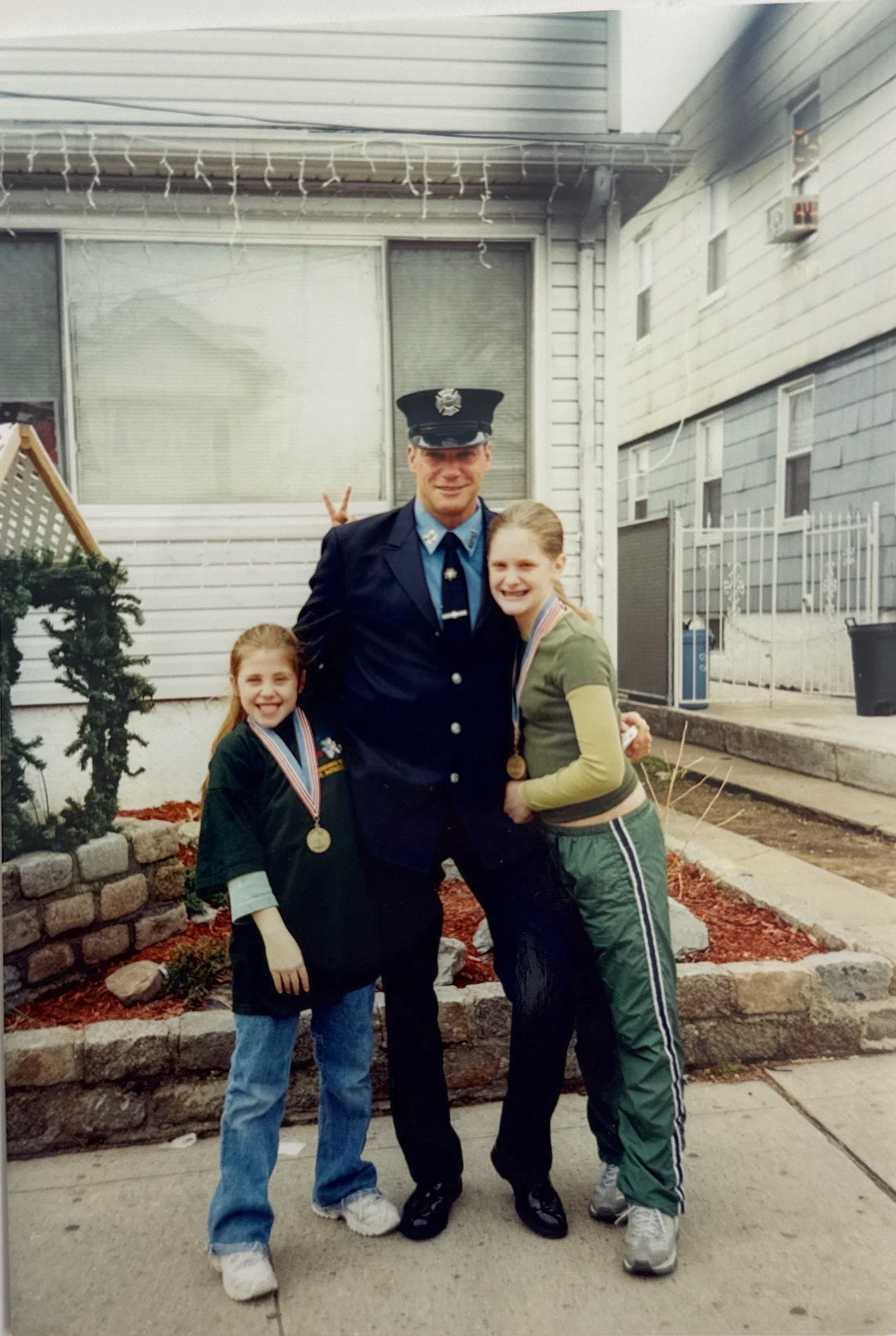
LIBERTY — Harold “Harry” Yodice was a retired New York City firefighter and longtime Liberty resident whose family remembered him as a husband, father, grandfather and neighbor shaped by work, service and an instinct to help.
He grew up poor in a Brooklyn neighborhood, raised his daughters to be tough and capable, renovated homes in Sullivan County and helped turn a garage behind Liberty United Methodist Church into a food pantry that still bears his name.
But to his wife, Karla Yodice, one part of Harry’s life helped explain the rest.
“Being a fireman was his life,” Karla said.
So when Harry was off duty the morning of Sept. 11, 2001, watching the attacks unfold from home with Karla, he did not stay home for long.
To Harry, the FDNY was more than a job. Firefighters were brothers. If other firefighters were in Manhattan, he was going too.
Harry gathered his bunker gear, went to his firehouse in Queens and eventually made his way toward Manhattan, parking near Church Street before walking to Ground Zero.
By then, Lower Manhattan was covered in dust, debris and paper. Firefighters, police officers and rescue workers moved through the wreckage where the World Trade Center had stood, searching for the missing and recovering the dead.
Late that night, Karla got the call she would remember for the rest of her life. It was the first time she heard Harry cry.
“He said, ‘Karla, I’m picking up my brothers and putting them in garbage bags,’” she said.
Karla later learned that every human remain recovered at the site, even something as small as a finger, had to be placed in a separate bag.
Harry’s words stayed with her.
Harry died June 12, 2026, at the age of 71 after a nearly decade-long battle with metastatic prostate cancer that his family said was related to his work at Ground Zero.
As the 25th anniversary of the attacks approaches, his family said Harry’s story is a reminder that the losses of Sept. 11 did not end that day.
It is also the story of the man who went there: a Brooklyn-born firefighter who grew up with little, built a life through work and used what he built to help others.
What it means to serve
Jessica Hipp said Sept. 11 was when she first began to understand what her father’s work really meant.
She remembered her mother arriving at school to pick her up early, something that almost never happened.
“A very bad thing has happened,” her mother told her. “Planes have hit buildings, but we don’t know where your dad is right now.”
Jessica was old enough to know her father was a firefighter, but still young enough that her parents had tried to protect her from the danger of his work. As the day settled in, she said, she began to understand that firefighters were the people who ran toward what everyone else was running from.
Amanda Swenson, Harry’s younger daughter, was in second grade at the time. Her mother also pulled her out of school, as so many parents did that day. But Amanda said she did not fully understand what was happening. Her father protected his children from much of it.
To her, at that age, it felt almost like another day of work for him. Her father went to work, and her father came home.
“You were always just safe with him,” Amanda said.
Only much later did she begin to understand what he had seen and carried.
Karla said those days at Ground Zero were frightening for families, too. Firefighters were still being hurt. No one knew what else might happen, whether there were more attacks coming or whether the pile itself might claim more lives.
“It was just scary,” she said. “Nobody knew.”
Amid the horror, Harry also remembered the kindness of New Yorkers. Karla said he told her about people bringing food, shoes and supplies to firefighters working at the site.
In the quiet hours after a long day sifting through rubble, exhausted firefighters slept wherever they could, shoulder to shoulder. Harry told the others he smelled coffee. They told him to go back to sleep.
“Yodi, shut up,” they said.
But Harry got up and found that a woman had arrived with Dunkin’ coffee and donuts. He returned with coffee for the men who had just told him to be quiet.
To his family, the story captured both the exhaustion of those days and the spirit of the city around them.
The long aftermath
For Amanda, her father’s life is also a reflection of how the impact of Sept. 11 continued long after the attacks.
In the years after the attacks, many first responders became sick. Harry’s family said many of the firefighters he worked with have since died from illnesses related to 9/11. Karla said the losses made the FDNY bond even more visible to her after Harry’s death, as firefighters and families she had never met reached out in support.
Harry, she said, always remained connected to the FDNY and to the idea of service.
“If it happens again, God forbid, I’ll jump in the car and I’ll go,” Karla remembered him saying.
She believes he meant it.
For Jessica, that willingness was difficult to fully understand.
“They knew that making it out alive that day did not mean making it out alive,” she said. “The words supreme sacrifice — every single person made that sacrifice, whether they died on that day or not.”
Harry’s greatest joy had been his daughters, Jessica said. Later, it was his grandchildren. His illness meant he did not get as much time with them as he should have.
“I don’t know how someone could look down their demise or their future, and everything that they will lose and have lost, and they would say they would do it again,” Jessica said. “That is a certain type of person.”
For Harry, Karla said, that was the job. You go. You do what has to be done.
As the 25th anniversary of the attacks approaches on Sept. 11, 2026, the FDNY has said more than 400 of its members have died from World Trade Center-related illnesses, compared with the 343 firefighters killed on Sept. 11 itself.
A Brooklyn childhood
Jessica said understanding her father’s childhood is important to understanding the rest of his life.
Harry grew up in Brooklyn, in the Williamsburg area near Butler Street, one of five brothers. His parents divorced when he was young, and his mother raised five boys largely on her own.
He did not come from much. Jessica said the family was very poor, and that there were times when Harry, his brothers and his mother struggled for food after his father left.
“Coming from that background, where they relied on other people and they relied on themselves to eat and to live,” Jessica said, gave him the doer personality that shaped the rest of his life.
Harry dropped out of high school around the 10th grade, later earning what he jokingly called his “good enough diploma.” But what he lacked in formal schooling, he made up for in grit, instinct, charm and an almost unstoppable belief that any problem could be worked through.
As a boy, one of his jobs was shopping for the family. His mother did not simply send him to one store. He learned to go from place to place, finding potatoes at one store, bread at another, and whatever was on sale somewhere else.
“He had to get the best deal,” Karla said.
That habit stayed with him for life. He learned from his mother how to negotiate, how to stretch a dollar, how to make something out of whatever was available and how not to waste anything. Amanda said he never wanted to throw anything out, because in Harry’s mind, almost anything could be used for something later.
That resourcefulness became one of the defining traits of his life. He could rebuild, repurpose or reimagine almost anything.
“He would see things and say, ‘I could do it. I could help. I could build this,’” Amanda said.
Jessica said the same drive carried into adulthood.
“If something had to be done, it got done,” she said. “One way or another.”
The firehouse family
Harry joined the FDNY around 1979 and spent much of his career at the Richmond Hill firehouse on Jamaica Avenue, where Engine Company 294 is housed with Foam 294 and Ladder Company 143.
The firehouse was not simply where he worked. It was part of his identity.
Jessica said she was proud of that work from the time she was a small child. She recently found old school papers from kindergarten or first grade where she had written about her father being a firefighter and saving people.
Harry’s daughters remember being around the trucks, the firefighters and their families. At Christmas parties, someone would dress as Santa and come down the fire pole. The children were allowed to climb on the trucks, and Jessica remembered getting lost in the back where the hoses were kept.
To a child, the firehouse felt oversized. The pots in the kitchen seemed large enough for her to fit inside.
Harry was known as the firehouse cook, Amanda said. He cooked meals for the other firefighters, and cooking became one of the ways his daughters understood the firehouse.
Jessica said Harry used to joke that when he joined the firehouse as a probationary firefighter, he had two choices: cook or clean.
“He said, ‘I don’t clean, so I learned how to cook,’” Jessica remembered.
The firehouse was also part of how Harry taught his family to understand the world. To him, firefighters were brothers. The bond did not end at one firehouse or one city. He told his family that if they ever needed anything, they could stop at any firehouse.
Karla remembered times when that proved true. Amanda, while attending NYU, once needed a place for a friend to park near her dorm. Harry told her to go to the nearby firehouse. Amanda was embarrassed by the idea of walking up to a group of firefighters as a young college student, but Harry knew what would happen.
“They’re going to wash the car,” Karla remembered him saying.
On another occasion, Karla said she went to an appointment in the city and asked at a firehouse if she could park nearby because she had an FDNY plaque. When she returned, her car had indeed been washed.
That was the firehouse world Harry belonged to. It was a brotherhood, a support system and, in many ways, an extension of his family.
After retiring and moving to Sullivan County, he still could not sit still. Although he lived in Liberty, he joined the Swan Lake Fire Department as a volunteer for several years because neighbors of his were involved there and because helping was simply what he did.
A father who taught toughness
After Amanda and Jessica’s parents divorced, the two often saw Harry on weekends and occasional weekdays. The time they had with him was filled with adventure.
He took them into New York City, to places like Rainforest Cafe and Mars 2112. He took them on trips to Italy, France and Costa Rica. He made them Mickey Mouse pancakes. After moving to Sullivan County, he took them snowmobiling, sledding and playing in the snow.
For Jessica, the weekends were defined by adventure. They went camping, skiing and to Mountain Creek Water Park. Harry built zip lines over his property.
Jessica said her friends would ask their parents if they could come along for the weekend because time with Harry was never ordinary.
Amanda said Harry raised his daughters to be capable and tough.
“He has me and my sister, two girls, but we were always like tomboys,” Amanda said. “He didn’t buy us makeup and jewelry. He bought us quads, Muck Boots, things like that.”
He taught them how to use tools, how to hang things, how to fix things and how to build. There was no sense, Amanda said, that being daughters meant they should stand aside.
“It wasn’t like, ‘Oh, you’re a girl, you’re a daughter, you can’t use tools,’” she said. “He would get his tools and we would fix it, and he would just show us everything.”
As she got older, Jessica came to cherish cooking with her father. Harry taught her in the kitchen, but he had his own way of testing whether she was serious.
“If you want to learn how to cook, you have to peel the garlic,” he told her.
In an Italian family, Jessica said, that meant peeling a lot of garlic. She remembered sitting there peeling clove after clove, sometimes until her fingers were raw.
She still hopes to write down some of his recipes for the family someday. The title, she said, would be “Peeling Garlic.”
That confidence and work ethic became part of both daughters’ lives. When faced with rejection, disappointment or difficulty, Amanda said, her father’s voice was there: keep going.
“You get denied from a job, or you get rejected from a school or somewhere, you just keep going and trying,” she said.
His lesson was simple. You never give up. You work with what you have. You fix what you can.
Meeting Karla
Years later, Harry met Karla through the firehouse world, too.
Karla, a Romanian immigrant, had come to visit her sister, who worked at a bakery near the firehouse. “My sister kept telling everyone I was coming,” Karla said. One day, Harry and his friend Timmy, another firefighter who Karla said later died from a 9/11-related cancer, walked into the bakery to order a cake for a lieutenant who had just been promoted to captain.
Karla did not speak English at the time.
Her sister introduced her to Timmy and his friend Harry. Harry asked her to come to the captain’s party. Karla, unable to speak directly to him, told her sister to translate a practical question: if she went with him, how would she talk to him?
Her sister came along to translate.
That first date brought Karla into a firefighters’ gathering that was supposed to be just the men from the firehouse, celebrating at a bar in Queens that Karla said later appeared in “The King of Queens.”
“I had a ball,” Karla said. “Me and my sister with 45 men around us. I didn’t understand a word they were saying, but it was so funny. We were drinking and laughing and joking.”
Their second date was at Long Beach, where Harry brought her to a volleyball event involving FDNY and NYPD members. Again, she understood little English. Again, she said, she had a wonderful time surrounded by firefighters.
On another early date, Karla said, they were having dinner in Howard Beach when a woman approached their table and asked whether he was Harold Yodice. When Harry said yes, the woman told him he did not know her, but she knew him.
“You saved my daughter from a fire,” the woman said, according to Karla.
For Karla, it was an early glimpse of the life Harry had lived before she knew him — and of the people who remembered him not just as a firefighter, but as the man who had shown up when they needed help.
Their relationship continued long-distance. Karla returned to Romania, came back to visit, and eventually, when the distance became too much, they decided to get married.
They went to Las Vegas on what they called their honeymoon before they were married.
“We did everything backwards,” Karla said. “But it worked for us.”
When asked what he was like as a husband, Karla did not hesitate.
“Great,” she said. “If I have to pick, I can’t pick somebody else. He really was a great man.”
He was not selfish, she said. If there was a problem, he dealt with it.
That did not only mean large problems. Karla remembered buying a bag of shrimp from Walmart, opening it and finding it smelled bad. When she went to return it without a receipt, she said an employee questioned whether she had bought it there. Harry later called the regional offices.
“How dare you call my wife a liar!” he said, according to Karla.
He eventually got the matter resolved, and Karla remembered receiving gift cards, cookies and more from the store.
Another time, Harry bought Karla a tennis bracelet from Macy’s. The first time she wore it, the clasp opened and the bracelet fell in the car. When she later tried to have it fixed, the store initially declined because she had not bought extra insurance. Karla told her mother, who knew Harry’s nature.
“Harry will fix it,” Karla remembered her mother saying.
He did. Macy’s fixed the bracelet, added a safety chain and gave Karla a gift certificate. Harry told her to spend it on her mother, because her mother had sent him to solve the problem.
“He was just a fixer,” Karla said.
Standing up for others
Amanda said her father had a deep instinct to stand up for people who needed help.
“He would just stand up for anyone,” she said. “If it was a kid from Brooklyn that didn’t have much, or really a family, he would take them in.”
Jessica said that instinct was tied to his childhood. Because Harry knew what it meant to grow up with little, he paid attention to children who were struggling.
As a firefighter in the city, she said, he noticed young people who spent time around the firehouse because they had little supervision or difficult home lives. One boy became a regular presence around the family.
“He took him everywhere,” Jessica said.
Harry brought him along on outings, including trips to Mountain Creek, and helped in smaller ways, too. Jessica said Harry also became a major supporter of St. Jude Children’s Research Hospital later in life, because he believed no child should have to suffer.
He did not tolerate people being mistreated or disrespected, especially those who had sacrificed for others. While he was often funny and easygoing, he could be firm and protective when it mattered.
“There was no problem too big for my dad,” Amanda said.
“Nothing stopped him,” Karla said. “And he was proud of his kids because they grew up to be the same.”
A life in Liberty
Harry and Karla moved to Sullivan County around 2002 or 2003, after his FDNY retirement. During a period when real estate prices were low, they began buying run-down houses, renovating them and renting them.
At one point, Karla said, they had around 15 to 17 houses.
The work fit Harry. He was good with his hands, willing to work hard and able to see potential other people might have passed over. Even during his cancer treatments, Karla said, they would come back from chemotherapy, stop to shop for materials and continue working on rentals.
Eventually, as his illness worsened, they began selling the properties.
At her father’s wake, Amanda recalled, the pastor’s husband, Bud, remarked that he had never seen tenants come to a landlord’s wake.
To Amanda, that said something essential about her father.
“It shows his character,” she said. “Everybody was his friend.”
Karla said even a trip to Walmart could become a social event. She might be ready to leave, groceries in the car, while Harry was still talking to a cashier about coffee.
“He was making friends on the stride,” she said. “Very, very outgoing, very friendly.”
Sullivan County also gave Harry room for the ideas he carried around in his head.
Jessica’s husband, Larry Hipp, once compared him to Walt Disney after watching a documentary about Disney’s habit of imagining things other people thought were impossible. Jessica said the comparison fit her father perfectly.
On his property in Sullivan County, Harry had room to try out the kinds of ideas he imagined. One of his zany ideas was to build a pirate ship.
“It sunk in one of the lakes,” Jessica said, though the failure was part of the fun.
He turned the basement into a cave, with foam on the walls and swords hung up when “Game of Thrones” was popular.
Later, he began turning the attic into a spaceship for his grandchildren. The project stood out to Karla, Amanda and Jessica as one of the clearest examples of how Harry’s mind worked. It was not a small toy or a cardboard backdrop. Jessica said it was about 15 feet wide, built with old parts from an RV and a junkyard, and wired with lights and filled with all sorts of things for the children to play with.
As his daughters grew up to have children of their own, those grandchildren became the light of Harry’s life.
Jessica said every picture she has of Harry with her son reminds her of the father she knew as a child.
“It was almost like living it again through my son,” she said.
Her children, LJ, 7, and Rylee, who turns 1 soon, called him “Buni,” a Romanian nickname for grandfather. Jessica said she is grateful LJ had time to make memories with him.
Harry would arrive with unexpected purchases, including life-size dinosaur costumes, and play with the children at every opportunity.
Amanda said he got a kick out of the little things the grandchildren did, even the babbling of a young child. He would insist he heard words in the sounds.
His family described him as a big kid. If he had been at a family barbecue, Karla said, he would not have sat off to the side. He would have been playing with the children, crawling around, building something out of sticks, leaves or whatever he could find in the yard.
“He would have kept LJ busy for hours,” Karla said.
Amanda said her son Erik reminds the family of Harry, from his inability to sit still to his restless curiosity and energy. LJ, who had more time with Harry, also shared that spark.
Friendships everywhere
Harry could make a friend almost anywhere.
Karla remembered going to a coffee shop in Jeffersonville with friends. In line was Chris Edwards, a retired firefighter wearing a fireman’s jacket, with his daughter. Harry immediately started talking to him.
Their friends finished their coffee. Harry and Chris kept talking.
“I thought Harry talks a lot,” one friend said, “I guess it’s a fireman thing.”
Harry and Chris became friends. Karla said the only thing they had in common at first was that both had been firefighters in New York City. For Harry, that was enough.
Amanda’s husband, Kevin, said he felt that same warmth when he first met Harry. Rather than remembering one specific story, he remembered the feeling Harry gave him.
“I just felt instant familiarity,” Kevin said. “He had a way of making you feel like you knew him your whole life.”
Jessica’s husband, Larry, said that once Harry got to know him, he was not treated as a boyfriend or son-in-law, but as family.
“It was always, ‘my son,’” both Larry and Kevin said.
Larry said Harry was “the life of the party” at family gatherings.
“He wanted to be in the middle of every story, wanted to be in the middle of every dance floor, wanted to be at the head of every table,” Larry said.
If Harry was there, Larry said, it was hard to not have a good time.
Amanda remembered traveling with her father and watching him communicate with people who did not speak English. He would point, gesture, laugh and somehow hold a conversation anyway. In Costa Rica, Karla said, he would go into a store looking for sausages and act out what he needed without embarrassment.
“He didn’t care what you looked like, the languages,” Amanda said. “He would still talk to them.”
“If you were interviewing my dad direct, I think you’d be here until tomorrow,” Amanda said.
Holy Harry’s Easter Epiphany
Although Karla is Greek Orthodox and Harry was Catholic, she said Harry was not especially churchgoing for much of his life.
Then, one Easter morning, he decided he wanted to go to church.
Karla said it was not her Easter, so she told him to go. Harry got in the car and drove. The first church he came upon where he saw people going inside was Liberty United Methodist Church.
At the door, he met Pastor Bridget.
Harry told her he was Catholic and asked whether he could come in.
“I don’t think Jesus was Methodist,” Pastor Bridget told him, and he went inside.
Harry liked that. He liked the small neighborhood church. He liked that it was simple, without the grandeur and ornamentation he associated with Catholic churches. He kept going.
As he became part of the church, Harry did what Harry always did. He asked what needed to be done.
He told Pastor Bridget that he was handy and could help. She told him about a garage behind the church that had been filled with items for decades. She had wanted to create a food pantry, Karla said, but needed help making it possible.
Harry’s answer was immediate.
“I’ll make it happen,” he said.
He cleared the garage and helped turn it into a working food pantry. Other church members helped with painting and other tasks, but the project carried Harry’s unmistakable stamp: take what was cluttered, broken or unused, and make it serve people.
Jessica said she later heard another story about the food pantry from someone at the church. When paperwork or funding was taking too long, Harry went to ShopRite and filled the pantry himself.
“I’ve never seen anything like it,” the woman told Jessica.
Later, while Harry and Karla were away in Costa Rica, the church surprised him by naming the pantry Holy Harry’s Food Pantry.
Karla laughed when remembering the name.
“I told Pastor Bridget, ‘Listen, he’s a good man, but by all means, he’s not holy,’” she said.
Harry, Karla said, was embarrassed. He may have claimed to be mad, but she believed he was mostly uncomfortable with the attention. He did not help in order to have his name put on a sign.
Jessica said her father was clear that he did not want the recognition.
“It is not the godly thing to be acknowledged for these things,” Jessica remembered him saying. “You’re just supposed to do them.”
Over time, though, he got used to it. Karla said he eventually told people about the pantry, especially if it meant drawing support to the work.
The name stuck. Holy Harry’s Food Pantry continues serving Liberty families, making his local legacy visible in one of the simplest and most direct forms of service: feeding people.
Cancer
Even as Harry built a life in Liberty, renovated homes, helped his church and became part of the community, the consequences of Sept. 11 were still unfolding.
Harry was diagnosed with prostate cancer around 2016, shortly before Jessica’s 2017 wedding. His family said he kept the diagnosis from his daughters for a time because Jessica was getting married, and later became pregnant, and he did not want to overshadow those moments.
Jessica learned he was sick the day after her wedding.
Looking back, she remembered being surprised that her father had wanted to leave the reception early. At the time, she was a little annoyed. The next day, she learned why.
Harry still looked like himself, Jessica said, and when she searched online for prostate cancer survival rates, she found reason to be hopeful.
“We were super hopeful,” she said.
Harry downplayed the diagnosis, reassuring the family that he would be fine.
“He was like, ‘Oh, it’s nothing. It’ll be nothing,’” Jessica said.
Doctors later tested his lymph nodes and found that the cancer had metastasized.
Harry would live with metastatic cancer for roughly a decade.
He was treated at Memorial Sloan Kettering Cancer Center. Karla said the trips alone were tiring, with the family driving between Sullivan County and the city for appointments, treatments and chemotherapy. But even cancer did not stop Harry from living in motion.
They would leave chemo, stop to shop, visit tenants, work on houses or go out to eat. Sometimes he could barely finish a steak, but he still wanted to go.
He took medication, including chemotherapy pills at one point, and Karla helped make sure he took them on schedule. But she said the illness did not dominate his life the way it might have for another person.
“He didn’t change his lifestyle at all,” Karla said. “Besides that, you know, we had to go to the doctor.”
Amanda said she never forgot her father had cancer, but he did not put it at the center of family life.
“He just moved on,” she said. “It wasn’t at the forefront of my mind every day, because he just didn’t make it that way.”
Larry said that unless Harry told someone he was sick, they might not have known until near the end, when the illness and aggressive treatments began to change him physically.
“He never asked for pity or special accommodations,” Larry said. “He took it in stride, and he fought it with everything he possibly could.”
Harry believed he would beat it.
“He kept saying, ‘I’m gonna beat this,’” Amanda said.
Even near the end, after weeks of not eating, he told Karla to ask the doctor for something to help his appetite.
“If I eat, I’ll get better,” he said, according to Karla.
When hospice came, Karla said the nurse asked for his list of medications. Karla told her he was taking morphine. The nurse waited for more.
That was it.
Karla said that aside from the cancer, he had been healthy. In her mind, without the illness he would have lived for many more years.
Their relationship with his oncologist was personal, too. Karla said Harry and his doctor became friends. At appointments, she would come in with a list of questions, only for Harry and the doctor to swap stories. They talked about going out for dinner and a glass of wine.
On the day Harry died, Karla called the doctor because Harry had been scheduled for a video visit. When she told him Harry had passed, the doctor told her he was sorry he never got to have that glass of wine with him.
A life that continues in service
The same pattern ran through the memories his family shared: Harry noticed what was in front of him and moved toward it.
In the city, that meant going to Ground Zero on his day off because he was needed. In Liberty, it meant renovating old houses, helping tenants and clearing out a church garage because Pastor Bridget wanted to start a food pantry.
Jessica said Harry worked his way out of poverty and built a life, but did not use that life only for himself.
“He built himself an empire so that he could use the resources to help other people,” she said.
At Liberty United Methodist Church, the pantry still carries his name. His family said Harry never wanted the attention, and Karla said he would have rolled his eyes at the sign.
But the name remains on the place he helped make possible: a former garage, cleared out and turned into shelves of food for people who needed it.